Pricing Plans
3 min
Understanding Pricing Plans
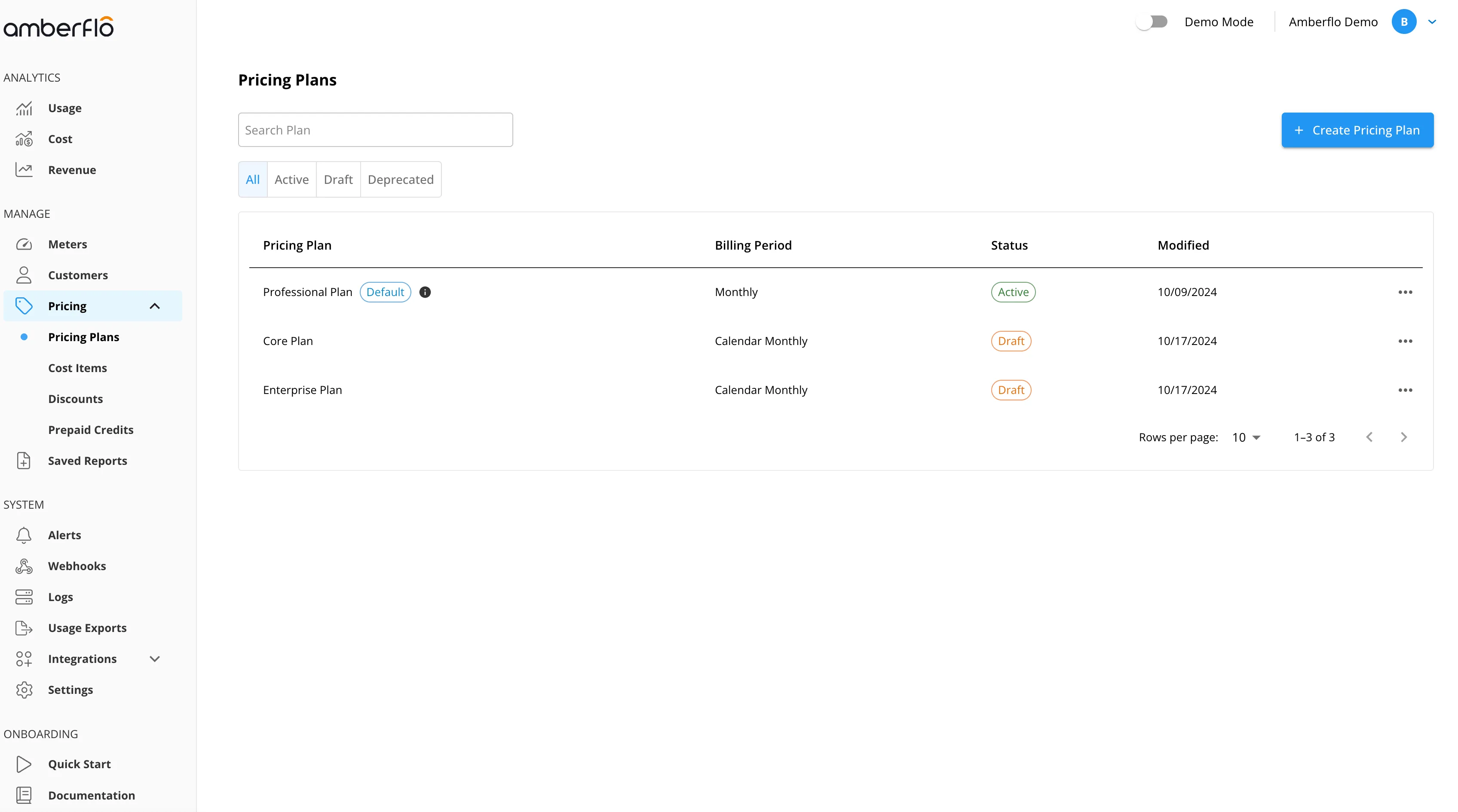
In Amberflo, Pricing Plans are collections of rate templates that define how customers are billed. These plans determine how usage is measured, priced, and rolled up into a final invoice.
Available Rate Templates
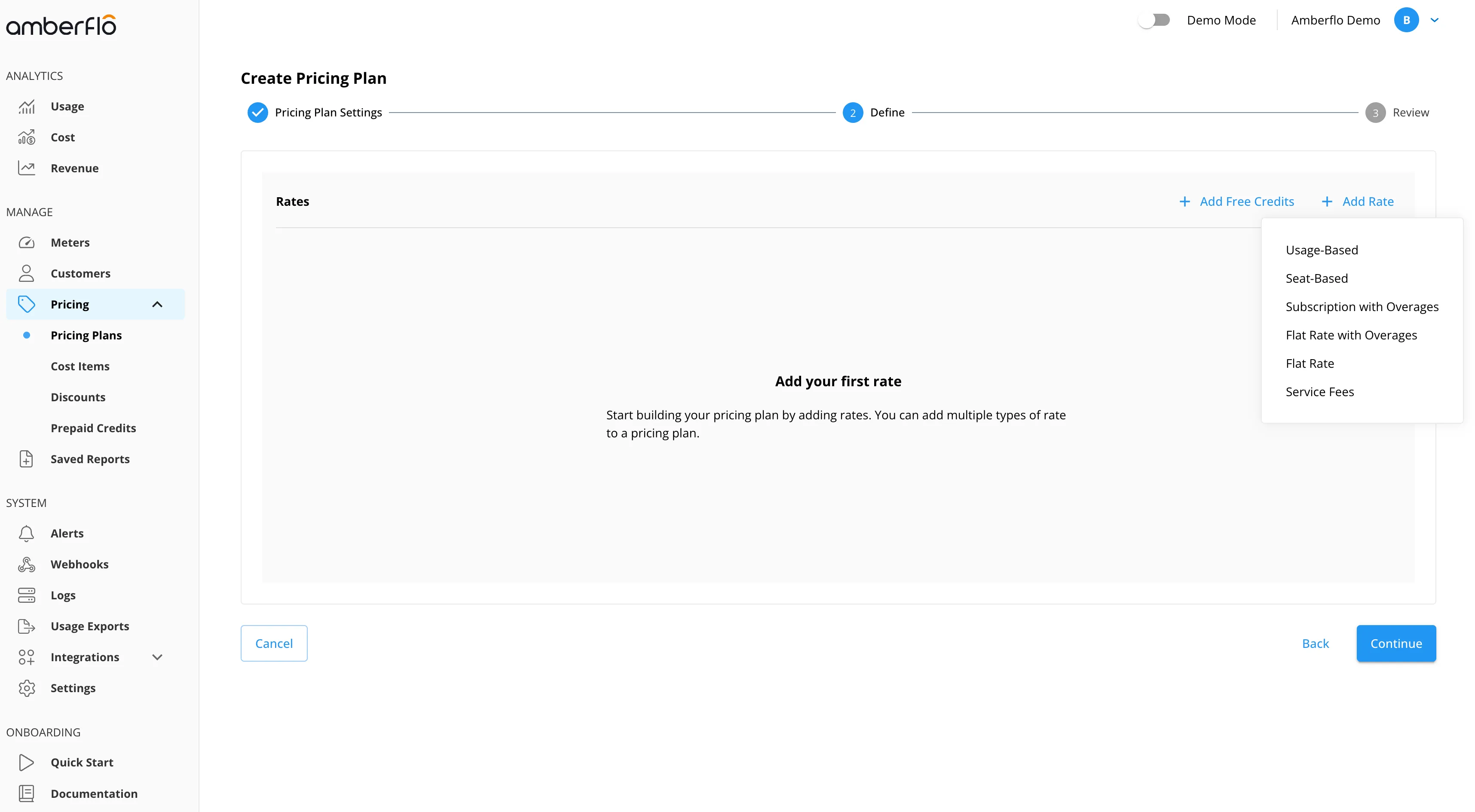
Amberflo provides out-of-the-box support for several common pricing models:
- Usage-Based: Customers are charged based on actual usage during the billing period.
- Seat-Based: Customers are billed for the number of active entities (such as users, files, or devices) at the end of the billing cycle.
- Flat Rate: Customers pay a fixed amount per billing period. Flat rate plans can also include overage charges if usage exceeds predefined limits.
- Subscription-Based: Customers subscribe to a defined number of instances (similar to AWS Reserved Instances). Additional usage beyond the subscription is billed at overage rates.
- Service Fees: A percentage-based charge is applied to the total invoice (for example, as a support or platform fee).
Default Pricing Plan
Amberflo always maintains a default pricing plan:
- If there is only one pricing plan, it is automatically set as the default.
- If multiple plans exist, you can configure which one is the default.
When a new customer is created and no pricing plan is explicitly assigned, the default plan will be applied automatically when their first usage event is ingested.
Assigning Pricing Plans to Customers
Pricing plans can be assigned to customers in two ways:
- Via the Amberflo Console: Use the Customer page to manually assign a pricing plan.
- Via API: Programmatically assign plans using the Amberflo API or SDKs.
Once a pricing plan is assigned, the customer’s usage will be rated according to the plan’s rules. Invoices are then generated at the defined billing frequency using those rates.